×

I started blogging in 1998, the same year Google was launched, when the digital world was still in its infancy. The concept of “blogging” was not mainstream, and everything from publishing to uploading was done manually using HTML.
Over the years, Google has evolved a lot with new algorithm updates and increasing competition. I have been fortunate enough to witness and experience these innovations and transformations, finally reaching a point where ‘rankings’ became the foundation of true success in the digital world. These developments led to the adoption of paid advertising, where securing the top ad position became a strategic and financial battle, which guaranteed better visibility, clicks, and revenue.
I’m Tony John, and I have been working in the Digital Marketing industry for the last two decades. There are countless organizations and businesses that achieved their full digital potential through effective digital marketing strategies. However, as we reach 2026, the introduction of Google’s AI Overview has completely redefined the very concept of ‘ranking at the top’. Google’s AI-generated answers now appear above both organic and paid results, completely changing how users access and consume information.
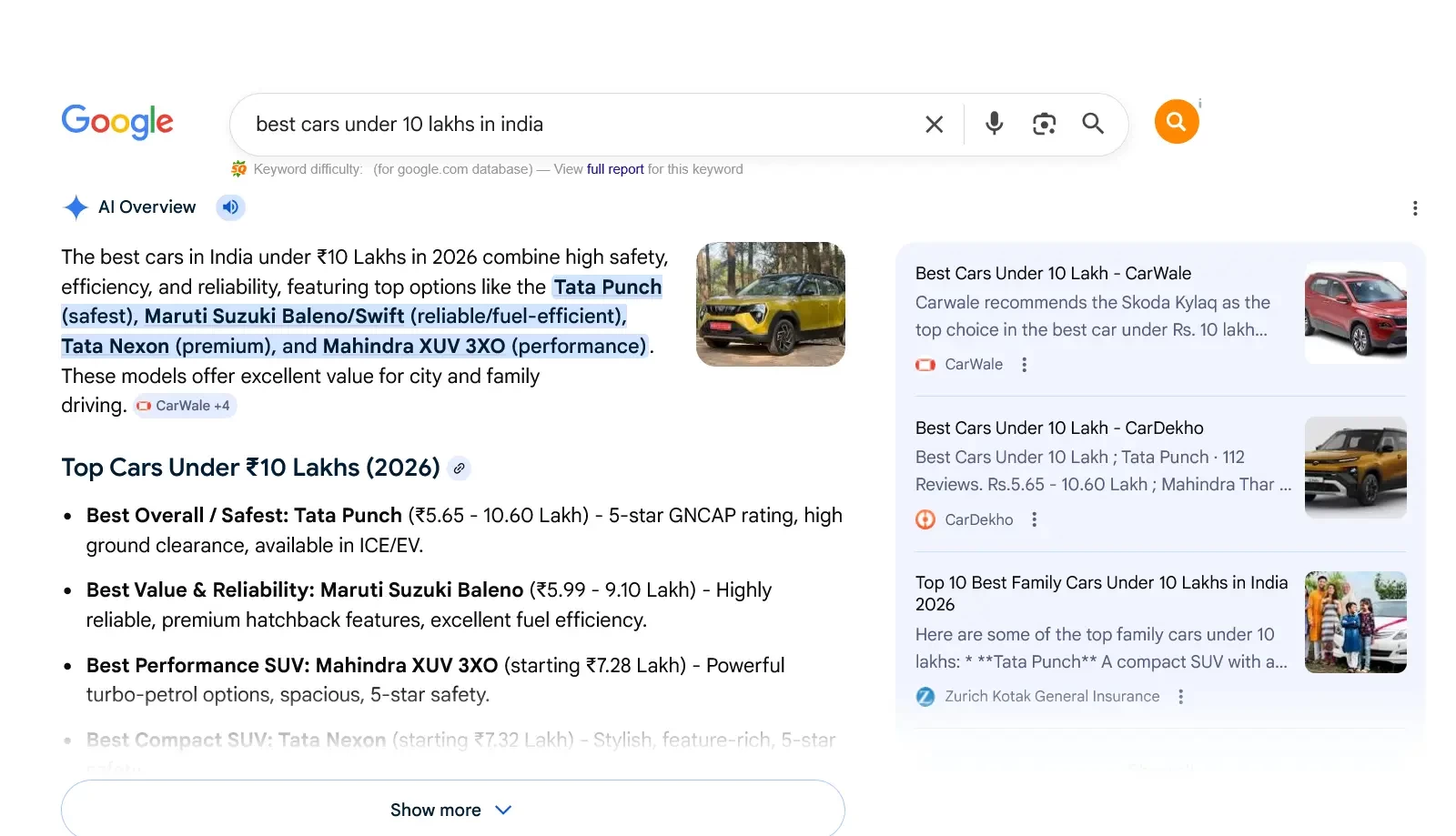
Google AI Overviews were officially rolled out in May 2024. This has completely and significantly changed the way results are presented, compared to the updates in recent years. Instead of suggesting websites to users, as paid ads and traditional organic strategies do, Google Overviews consist of AI-generated summaries that directly answer user queries at the top of the page. These overviews are created by combining information from multiple credible sources across the internet to deliver a clear response.
According to my observations, AI overviews typically appear for informational, research-based, and comparative queries. These are almost the same searches that once drove high-value traffic, particularly to blogs, landing pages, and even paid ad campaigns. Moreover, compared to featured snippets or “People Also Ask” boxes, AI Overviews occupy significantly more screen space. This means that they reduce the visibility of both organic results and paid ads by pushing them further down the page.
As the answers are immediately visible to the users, the need to click through to a website is completely eliminated. This diminishes the opportunities for advertisers and publishers to substantially capture attention. In essence, AI Overviews have fundamentally introduced a new layer of competition in the SERPs. Today, brands are no longer simply competing with each other but with Google’s AI-generated responses.
For years paid search has been driven by a simple principle securing the top ad position on search results pages. Higher bids, better quality scores and continuous optimization helped advertisers reach the top position. However AI Overviews have changed this approach significantly and some of them are:
Ads pushed below AI Overviews: As AI Overviews take up the most visible space on the SERP, paid ads are often pushed further down the page. Even well-optimized ads may no longer appear where users naturally look first.
Reduced above-the-fold visibility: AI-generated answers occupy the top section of the screen, especially on mobile. This means that ads that were once immediately visible now require users to scroll before they are seen.
CTR Drop: While ads may still register impressions, user attention is increasingly captured by AI Overviews. This often results in fewer clicks, even when campaigns appear to be performing well on paper.
Higher competition for top premium space: As fewer ads are visible at the top of the page, advertisers are often forced to bid more for better visibility. This competition drives users to bid more, without the certainty that they’ll actually see better results.
While Google AI Overviews are considered a major disruption to traditional paid search, they also present an opportunity to rethink how we connect with users. Today, top ad placement is not the only path to visibility, as user attention, relevance, and engagement have become the true currency of visibility. Here’s how brands can win in this new landscape:
Prioritize high-intent and branded queries: Focus on searches where the user’s intent is clear and conversion-ready. These are the queries that AI Overviews are less likely to dominate, allowing your ads to have a better chance of being seen and clicked. By concentrating on branded and high-intent keywords, you can also manage your budget appropriately.
Align ad messaging with AI answers: Instead of contending with AI-generated summaries, use them as a guide for your advertising. Strategically position your ads to complement the AI content. This approach encourages users to click through, as your ads provide actionable next steps beyond the AI’s answer.
Optimize beyond metrics: Don’t rely solely on traditional click-based metrics to assess performance. Track assisted conversions, engagement, and overall brand growth to understand how your campaigns influence users. This perspective helps you see the real impact of your ads, even when AI Overviews capture initial attention.
Integrate organic and paid strategies: It is important to acknowledge that paid ads alone won’t win in an AI-first SERP. You need a unified approach. High-quality content, strong SEO, and authoritative pages can influence AI-generated summaries. When your paid and organic efforts work together, you increase the chances that your brand is visible even above or alongside AI Overviews.
It is important to acknowledge that paid ads alone won’t win in an AI-first SERP. You need a unified approach. High-quality content, strong SEO, and authoritative pages can influence AI-generated summaries. When your paid and organic efforts work together, you increase the chances that your brand is visible even above or alongside AI Overviews.
Over the last two decades, I have observed how search engines have evolved. Success now depends on integrating SEO and PPC, targeting the right queries, and strategically complementing AI-generated content in an AI-first SERP environment.
In my view staying ahead on SERPs in an AI driven search landscape requires a shift in mindset rather than relying on traditional ranking tactics alone Search engines are becoming more intelligent and user focused which means success depends on how well content aligns with intent relevance and overall user experience I have seen that businesses which adapt early to AI influenced changes in search behavior tend to maintain stronger visibility compared to those that rely only on conventional SEO or PPC strategies.
Ultimately I believe the future of search will reward adaptability consistency and a deep understanding of user needs in an AI first environment.
